
How Low Temperatures Shape the Season
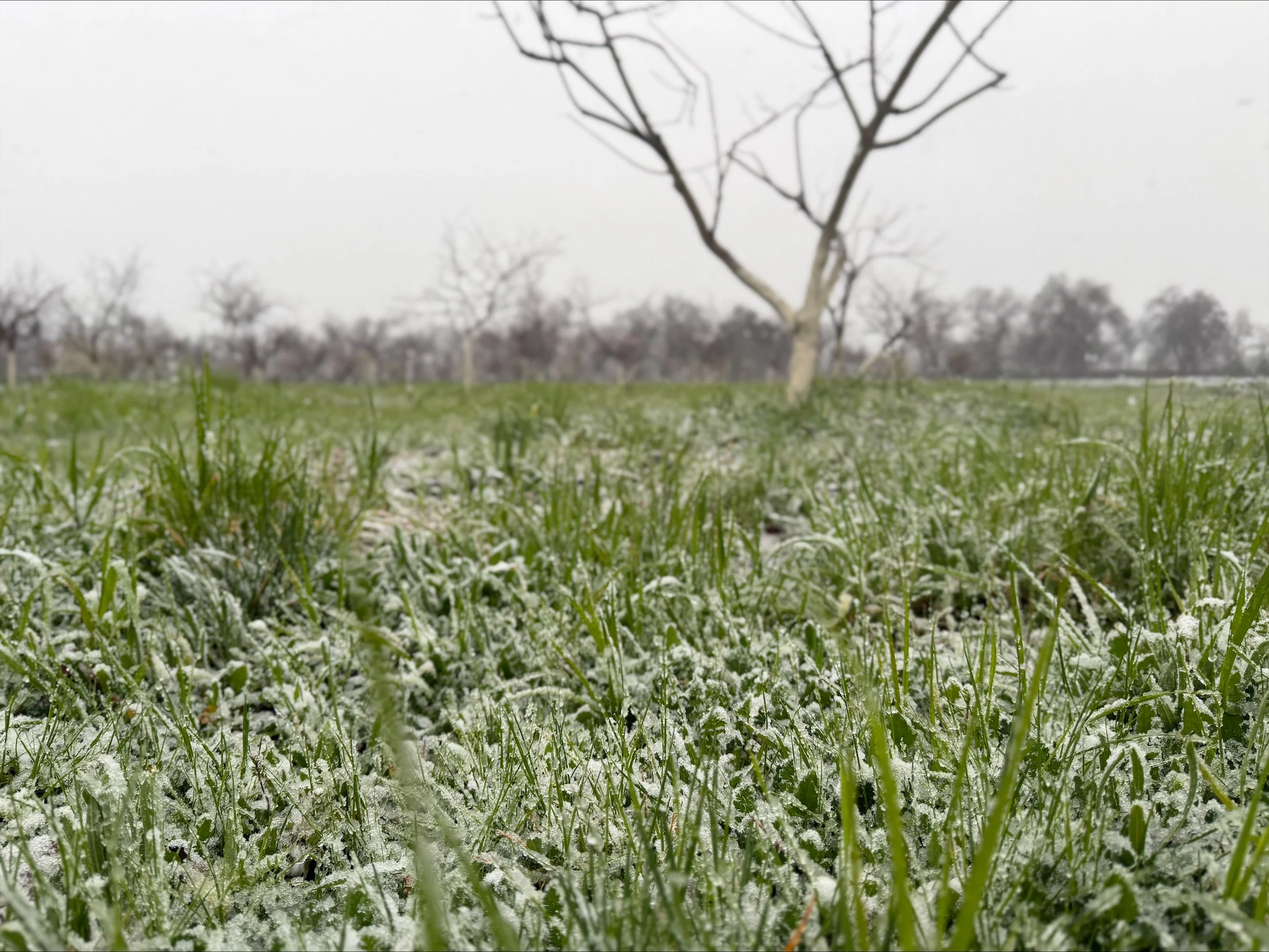
What Winter Cold Means for Orchard Crops at Providence Riverland Farm
Winter does more than slow things down. For orchard crops, low temperatures quietly determine what spring and summer will look like.
At Providence Riverland Farm, where we steward land along the Sacramento River corridor, cold nights are not just weather events—they’re biological signals. And when temperatures dip too far, too fast, or at the wrong time, the impact can ripple through the entire growing season.
Chill Hours: The Cold We Actually Need
Many orchard crops such as peaches, plums, apricots, and certain apple varieties require chill hours. These are cumulative hours spent within a specific temperature range during dormancy.
When chill requirements are met:
Bud break is more uniform
Bloom timing is more predictable
Fruit set improves
Yields are more consistent
When chill hours are insufficient:
Bud break becomes uneven
Bloom stretches out over weeks
Pollination suffers
Fruit quality declines
In warmer winters, insufficient chill can quietly reduce productivity long before visible problems appear.
The Other Side: When Cold Becomes Damage
While dormancy requires cold, extreme low temperatures can cause injury, especially during these scenarios:
Early Bloom
If a warm spell triggers early bloom and is followed by a freeze, delicate blossoms can be lost overnight.
Post Bloom Fruit Set
Young fruitlets are highly sensitive. Even a brief drop below critical temperatures can reduce yield significantly.
Prolonged Hard Freeze
Extended exposure to very low temperatures can damage cambium tissue, split bark, or weaken trees for multiple seasons.
For a farm committed to regenerative practices and long term stewardship, protecting tree health is as important as protecting a single year’s crop.
Varied Microclimates
River adjacent land often behaves differently than surrounding hills. Cold air settles. Frost pockets form. Slight elevation changes can mean the difference between damage and safety.
Understanding where cold air drains, which blocks cool fastest, and how long temperatures stay below threshold allows for smarter planning in future plantings and protection strategies.
Monitoring for Stewardship
At Providence Riverland Farm, tracking temperature patterns helps us:
Evaluate chill accumulation across seasons
Anticipate bloom timing
Identify frost risk windows
Improve irrigation timing in spring
Plan crop selection based on long term patterns
Low temperature data becomes a guide, not just a record.
The Cold, as a Teacher
Winter reminds us that farming is a partnership. We do not control the temperature, but we can observe it, learn from it, and adjust.
By paying attention to both the chill we need and the cold we must guard against, we strengthen resilience in our orchard systems and stay aligned with our mission of cultivating a healthy future for our community.
Because what happens on the coldest nights often determines what we harvest in the warmest months.
